
Blog
What Are the Best Types of Wooden Table Tops in 2026?
A wooden tabletop can make a room feel warm, grounded, and personal. Yet the best choice depends on more than appearance. In 2026, buyers still weigh durability, grain, maintenance, budget, and how a table will be used each day. A busy kitchen has different demands from a quiet reading nook. Spilled coffee, chair impacts, and afternoon sunlight all matter.
Woodworker and furniture designer George Nakashima wrote, “A tree is our most intimate contact with nature.” That idea helps explain wood’s lasting appeal, but it does not make every species right for every table. Oak is known for its pronounced grain; maple often offers a calmer, lighter look; walnut brings deeper tones. Solid wood can usually be renewed, while a veneer may offer a distinct surface over a different core. Construction and finish matter, too. A beautiful top can still disappoint if it is poorly made or badly suited to its setting.
This guide explores the best types of Table Top Wooden surfaces for different homes, styles, and budgets. It compares common species, outlines practical trade-offs, and explains what to check before buying. Expect details on grain, daily care, and resistance to wear. No single wood wins every room. The right choice should look good, feel right, and handle real life—not just a showroom display.
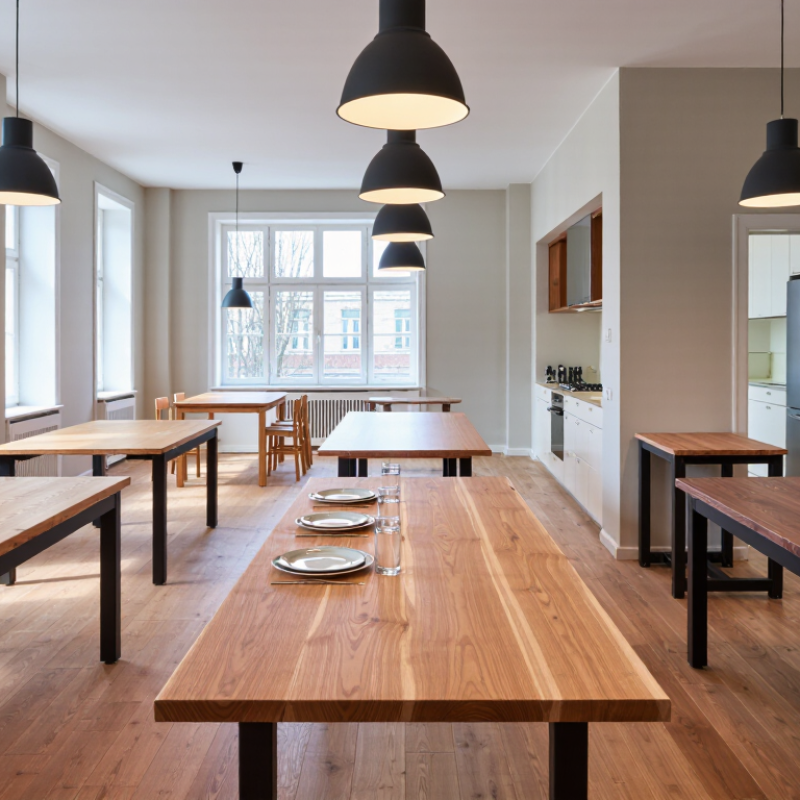
Classify Tabletops: Solid Slabs, Edge-Grain, Butcher Block, and Veneer
A solid-slab top keeps wide boards intact, so its grain reads as one broad landscape. That look is striking, but seasonal movement can open seams or create cupping if the wood is poorly dried or restrained. Edge-grain tops use narrow strips turned so their long-grain edges form the surface. They show steady, linear grain and can handle daily use well. Butcher block describes an assembled construction, not one single grain direction: blocks may be arranged edge-grain or end-grain. End-grain patterns look like small wooden tiles. They can be harder to refinish evenly.
Veneer uses a thin layer of real wood over a core, often plywood or fiberboard. It offers a continuous species-specific appearance with less solid lumber, but deep sanding can expose the core. The USDA Forest Products Laboratory’s 2021 Wood Handbook places wood’s fiber-saturation point near 30% moisture content; below that point, moisture changes can cause shrinkage and swelling. Species and grain direction affect the amount. This is why construction alone cannot predict performance. Check the core, edge treatment, finish, and support beneath the top. One detail is easy to overlook: butcher block is not automatically tougher in every layout. A wet cup left overnight can still mark the finish.
What Are the Best Types of Wooden Table Tops in 2026? — Solid Slabs, Edge-Grain, Butcher Block, and Veneer
| Feature | Solid Slab | Edge-Grain | Butcher Block | Wood Veneer |
|---|---|---|---|---|
| Typical construction | A thick, wide piece of solid wood, sometimes with a natural live edge. Large tops may be made from joined boards or slabs. | Solid-wood strips are glued side by side with their long edges facing upward. | Thick wood strips are laminated together. Many tops use edge-grain construction; end-grain versions show the ends of short blocks. | A thin layer of real wood is bonded to a stable core, commonly plywood or engineered wood. |
| Appearance | Distinctive grain, knots, and natural variation; live-edge versions retain the tree’s outer contour. | Long, continuous grain lines create a clean, consistent surface. | Strip or block patterns give the surface a sturdy, workshop-inspired look. | Real-wood grain is visible on the surface; matching veneer sheets can create a uniform appearance. |
| Durability in everyday use | Depends on wood species, thickness, finish, and joinery. Solid wood can dent or scratch but is generally repairable. | Strong for normal dining and desk use when well made and properly finished. | Designed for substantial use. Suitability for cutting directly on the surface depends on the finish and intended use. | Suitable for ordinary use when the surface and edges are protected; the thin surface layer can be damaged by deep cuts or sanding. |
| Movement and stability | Solid wood expands and contracts across the grain as humidity changes. Proper attachment allows seasonal movement. | Also responds to humidity; well-dried stock and appropriate mounting help reduce problems. | Laminate construction does not eliminate wood movement. Stable indoor humidity and suitable support remain important. | A balanced panel construction is generally more dimensionally stable than a wide solid-wood panel, though moisture can still affect it. |
| Repair and refinishing | Often repairable and refinishable, depending on thickness, finish, and construction. | Can usually be sanded and refinished if enough solid wood remains. | Solid-wood versions can often be resurfaced; repeated sanding reduces thickness over time. | Minor surface damage may be repairable, but sanding is limited by the thin veneer layer. |
| Relative weight | Often heavy, especially in thick or wide formats. | Moderate to heavy, depending on wood species and panel thickness. | Often heavy because of its thick, laminated construction. | Often lighter than a comparable thick solid-wood top, depending on the core material. |
| Relative cost | Often high for wide, unusual, or figured slabs; price varies considerably by species and sourcing. | Typically moderate to high, depending on species, thickness, and workmanship. | Typically moderate to high; block thickness and wood species affect cost. | Can be a more economical way to use decorative wood, though premium veneer and cores can increase cost. |
| Best suited to | Statement dining tables, desks, and spaces where natural character is a priority. | Dining tables, desks, and other everyday surfaces with a straightforward solid-wood look. | Heavy-use work surfaces and tables where a thick, practical appearance is desired. | Tables where a real-wood surface and a consistent look are desired with a stable panel construction. |
| Main considerations | Check for proper drying, sound construction, and mounting that accommodates wood movement. | Inspect glue joints and finish; protect the surface from standing water and abrupt humidity changes. | Confirm whether it is edge-grain or end-grain and whether the finish is intended for food contact if used for food preparation. | Protect edges and avoid deep sanding. Keep water from entering seams or damaged areas. |
Note: “Butcher block” describes a thick laminated wood top and may refer to edge-grain or end-grain construction. Performance, maintenance, and cost vary with the wood species, finish, dimensions, and quality of construction.
Related Posts
-
Best Table Top Wooden Designs for Your Home Collaboration and Style Tips
-
Why Choose Table Top Wooden Products at the 139th Canton Fair?
-
How to Choose the Best Luxurious Sofa for Your Home?
-
Why Choose a Modern Dining Table for Your Home?
-
How to Choose the Perfect Wooden Dining Chairs for Your Home Decor
-
2026 How to Choose the Perfect Solid Wood Dining Room Table?